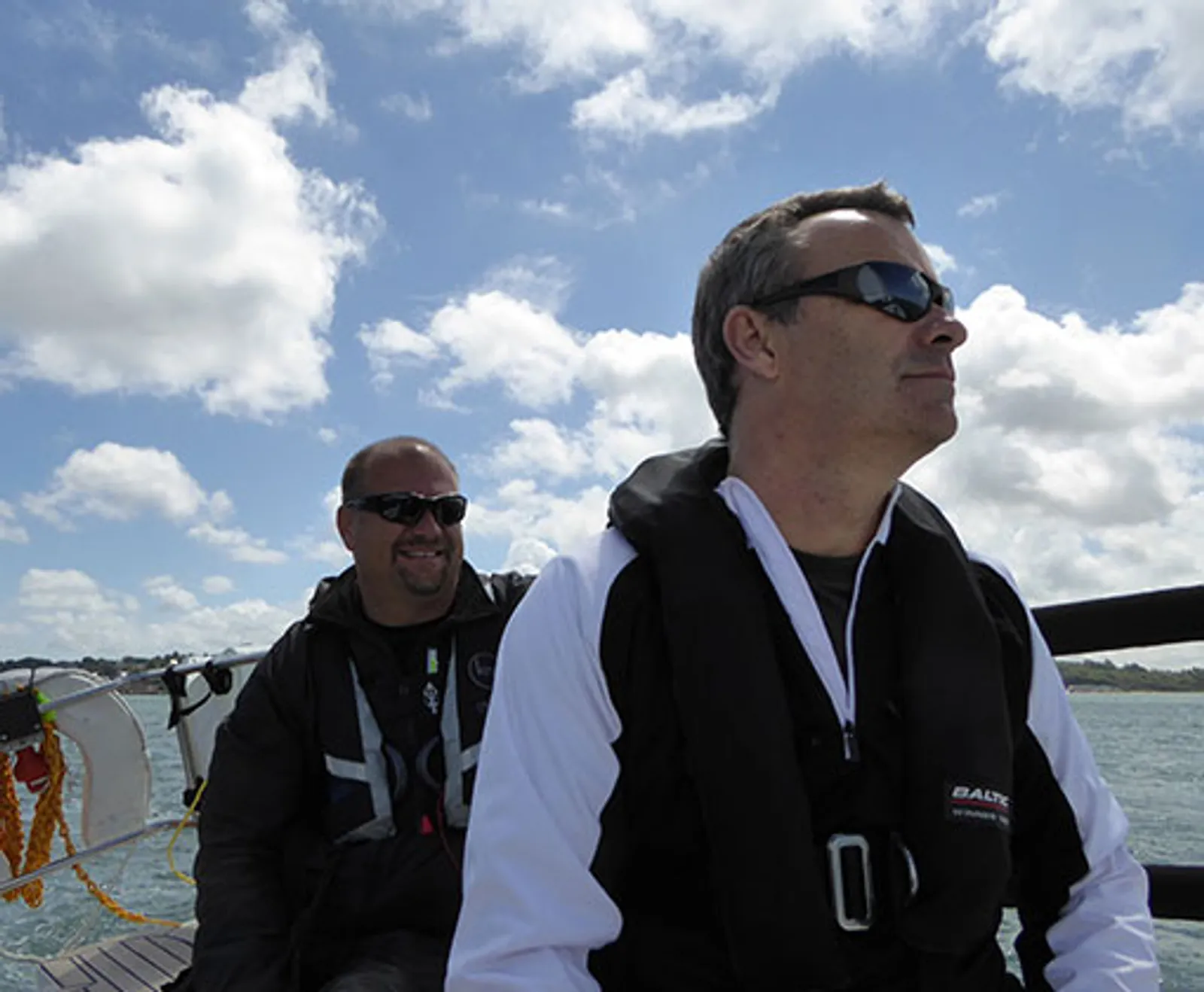
RYA Day Skipper Sail
A hands-on course highly recommended for anyone who regularly sails on board a yacht. Designed to improve your skills and build knowledge of all aspects of life at sea whilst skippering a sailing yacht during short coastal passages by day and night.
RYA Day Skipper is a hands-on course that is highly recommended for anyone who regularly sails on board a yacht. It's designed to improve skills and build knowledge of all aspects of life at sea whilst skippering a sailing yacht during short passages.
You will spend 5 days navigating and sailing your way across the Solent and Southampton, including some night sailing. Under the watchful eye of your instructor, you'll practice your skippering skills, ensuring your crew are safe and happy.
You will plan and put into practice a variety of different passages, including the execution of pilotage plans in to (and out of!) busy rivers, anchorages and marinas. Other key skills include interpreting weather forecasts, engine maintenance, sail handling and sail trim.
Armed with your RYA Day Skipper qualification, you will boost your confidence to take charge of a sailing yacht and explore beautiful harbours and anchorages.
Prerequisites
- Knowledge: Competent Crew level. Day Skipper theory recommended beforehand.
- Required Experience: 5 days on a sailing yacht, 100 miles sailing distance, 4 hours night sailing.
What You'll Learn
- Preparation for sea
- Deck work and sail handling
- Navigation and chart work
- Pilotage planning and execution
- Meteorology and weather forecasts
- Rules of the road
- Maintenance and repair work
- Engine operation and checks
- Victualling a yacht
- Emergency situations
- Yacht handling under power and sail
- Passage making
- Night cruising
Detailed Syllabus
Preparation for Sea
- Prepare a yacht for sea, including engine checks, selection of sails
- Securing and stowage of all gear on deck and below
Deck Work
- Reef, shake out reefs and change sails to suit prevailing conditions
- Prepare an anchor and mooring warps
- Take charge on deck when mooring alongside, coming to a buoy, anchoring
- Weighing anchor and slipping from a buoy or alongside berth
Navigation
- Proficient in chartwork and routine navigational duties on passage
- Taking and plotting visual fixes
- Use of electronic navigation equipment for position fixing
- Use of waypoints
- Working up to DR and EP
- Estimating tidal heights and tidal streams
- Working out course to steer to allow for tidal stream, leeway and drift
- Knowledge of IALA buoyage
- Maintenance of navigational records
- Use of echo sounder and lead line
Pilotage
- Prepare and execute a pilotage plan for entry into, or departure from, harbour
- Use of leading and clearing lines
- Use of transits and surroundings as aids to pilotage
Meteorology
- Sources of forecast information
- Interpret shipping forecasts and use a barometer as a forecasting aid
Rules of the Road
- Working knowledge of the International Regulations for Preventing Collisions at Sea
Maintenance and Repair Work
- Understand and carry out maintenance tasks
- Properties and uses of common synthetic fibre ropes
Engines
- Change fuel and water filters, pump impeller
- Bleed the fuel system
Victualling
- Understand how to victual a yacht
Emergency Situations
- Correct action as skipper for recovery of man overboard
- Distress flares and how to use a liferaft
- Operate a radiotelephone in an emergency and send a distress message
- How to secure a tow
- Rescue procedures including helicopter rescue
Yacht Handling Under Power
- Bring a boat safely to and from an alongside berth, mooring buoy and anchor
- Handle various conditions of wind and tide
Yacht Handling Under Sail
- Steer and trim sails effectively on all points of sailing
Passage Making
- Plan and make a coastal passage
- Account for relevant navigational hazards and limitations
- Consider the type of boat and the strength of the crew
Night Cruising
- Experience sail cruising at night, including leaving and entering harbour
- Special consideration for pilotage plans, keeping a lookout
- Identifying marks by night
After the Course
On successful completion you will be able to skipper your own yacht or charter yacht confidently on coastal passages. This qualification also allows you to obtain an International Certificate of Competence (ICC), the requirement for charter abroad.
Frequently Asked Questions
Do I need to do the Day Skipper theory course first?
The theory course is strongly recommended before the practical. It covers navigation, chartwork, tides, and weather — all of which you will put into practice on the water. You can take the theory as an online course before your practical dates.
What experience do I need?
You need 5 days, 100 miles, and 4 night hours logged on board a sailing yacht. Competent Crew level sailing ability is expected.
Do I stay on the yacht overnight?
Yes — you live on board the yacht for the duration of the course. This includes at least one night sail, which is a fantastic experience and a key part of the syllabus.
What will I be able to do after the course?
You will be qualified to skipper a yacht in familiar waters by day. This opens the door to chartering yachts and skippered sailing holidays. Many students go on to the Coastal Skipper course.
What happens if the weather is bad?
We sail in most weather conditions — it is all part of the learning. Your instructor may adjust the passage plan to suit conditions, which is itself a valuable lesson in seamanship.
Where do I meet and what time?
Full joining instructions including the exact meeting point, start time, and parking information will be sent to you by email before the course.
What if I need to cancel?
Please see our terms and conditions for our cancellation policy. We understand plans can change and will always try to move you to an alternative date where possible.