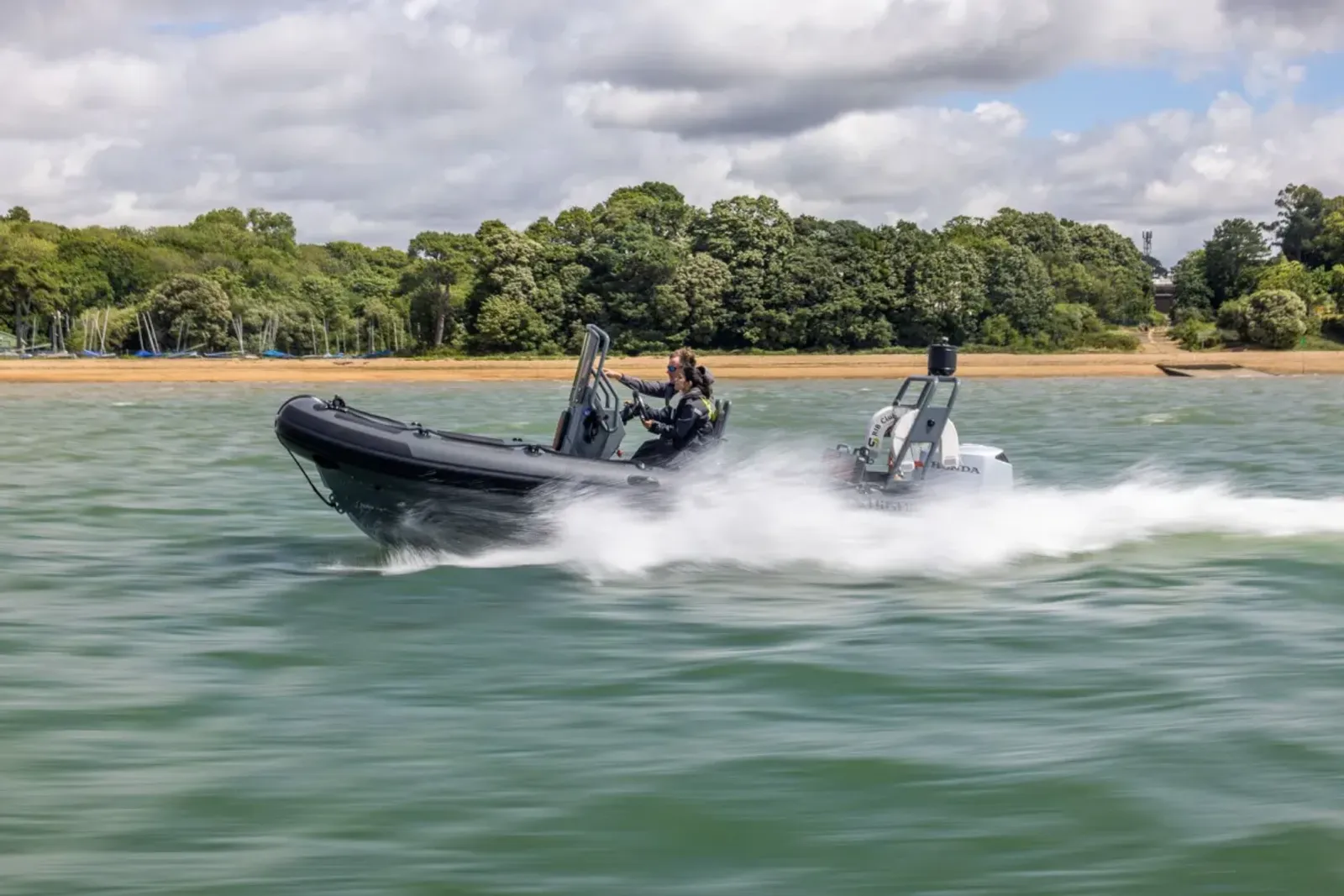
RYA Powerboat Level 2
A popular entry-level course that provides the skills and background knowledge needed to drive a powerboat safely at speed and in close quarters. Also enables the holder to obtain an International Certificate of Competence (ICC).
RYA Powerboat Level 2 is a popular entry level course that provides the skills and background knowledge needed to drive a powerboat at speed and in close quarters. It also enables the holder to obtain an International Certificate of Competence (ICC).
This two-day course is based at our training facilities at Hamble Point Marina, where you will spend most of the first morning. Once out on the water, the busy Hamble River provides ample opportunity to practice close quarters boat handling and we're minutes away from the central Solent where driving at planing speed and high-speed manoeuvres can be taught in open water.
You will also focus on man overboard recovery, and cover the collision regulations as they apply to powerboats.
Powerboat Level 2 is an excellent confidence-builder. Whether you're planning high speed day trips with friends, or simply exploring rivers with the family, this course equips you with skills and knowledge needed to be safe and have a good time on the water.
Prerequisites
No previous experience is required. A basic understanding of navigation will be very helpful — we recommend the RYA Essential Navigation course beforehand.
What You'll Learn
- Launching and recovery
- Boat handling at slow and high speed
- Securing to a buoy
- Anchoring
- Coming alongside
- Man overboard recovery
- Theory and collision regulations
- Basic coastal navigation
Detailed Syllabus
Launching and Recovery
- Use of a trailer or launching trolley
- Consideration of launching and sea conditions, including hazards and obstructions
- Number of persons required to launch/recover
- Construction, width and condition of slipway
- Steep/slippery slipways, beach launching, lee shores
- Care of trailer bearings, hitch, lashings, ties, lights and winch
- Trailer parking
- Prepare the boat, lines, fenders, safety equipment, fuel tanks
Boat Handling
- Loading effects on handling, performance, balance and trim
- Displacement boats: handling ahead and astern, carrying way
- Crew members: minimum number in high speed craft, keeping a lookout
- Awareness of other water users, including effect of wash
- Steering, controls, effect of current or tidal stream
- High speed manoeuvring: planing, trim tabs and power trim
- Planing boats: propeller angle and immersion, shallow drive
- Pre-start checks, engine starting and stopping
- Use of appropriate length kill-cord at all times
- Low speed manoeuvres: turning in a confined area, effect of wind on bow
- High speed manoeuvres: S-turns and U-turns
Securing to a Buoy
- Preparation of mooring warp
- Use of a boat hook
- Method of approach
- Crew communication
- Making fast
- Procedure when overshooting
Anchoring
- Method of approach in various conditions
- Taking way off
- Crew communication and checking holding
- Depth of water, holding ground, scope required
- Types of anchor, stowage and attachment
- Preparation of anchor, chain and warp
- Weighing anchor
Leaving and Coming Alongside
- Preparation and use of painter, lines and fenders
- Speed and angle of approach
- Wind effect and tidal stream
- Making fast alongside
- Use of springs
- Leaving ahead or astern
Man Overboard
- Recovery of man overboard
- Take immediate action
- Observe the casualty
- Correct return with awareness of propeller
- Approach and recover the person in the water
Theory
- Types of craft and hull forms
- Engines and drives: outboard, inboard and outdrive units
- Fuel tanks, fuel lines, batteries, wiring, fire extinguishers
- Routine engine maintenance and fault diagnosis
- Use and limitations of GPS
- Local byelaws around commercial shipping
- Sources of weather information
- Communication with other craft
- Emergency action and preventing sinking
- Towing and being towed
- Fire precautions and fighting
- Ropework and distress signals
- IRPCS rules 5, 7, 8, 9, 12-19
Coastal Navigation
- Pilotage and passage planning
- CG66 Small Craft Safety Scheme
- Charts, chart symbols, buoyage systems
- Tides and tidal streams
- Use of steering and hand bearing compasses
After the Course
You will be able to handle a powerboat confidently and have fun on the water whilst being aware of your own limitations and those of your craft. You can apply for your ICC to charter powerboats abroad.
Frequently Asked Questions
Do I need any previous experience?
No — the RYA Powerboat Level 2 is designed for complete beginners. You will learn everything from scratch over the two days, including boat handling, launching, recovery, and basic navigation.
What certificate will I receive?
You will receive the RYA Powerboat Level 2 certificate, which is the minimum qualification required to hire powerboats in the UK and abroad. It also satisfies the requirement for obtaining an ICC (International Certificate of Competence).
What happens if the weather is bad?
We run courses in most weather conditions as it is all part of the learning experience. In extreme conditions we may need to reschedule, and we will contact you as early as possible if this is the case.
Where do I meet and what time?
Full joining instructions including the exact meeting point, start time, and parking information will be sent to you by email before the course.
Is lunch included?
Lunch is not included. There is a café at the marina, or you are welcome to bring a packed lunch. We recommend bringing plenty of water and snacks as you will be on the water most of the day.
What if I need to cancel?
Please see our terms and conditions for our cancellation policy. We understand plans can change and will always try to move you to an alternative date where possible.
Will I get seasick?
Seasickness is uncommon on powerboat courses as you are mostly in sheltered waters. If you are concerned, we recommend taking a suitable remedy before the course — your instructor can offer advice.